
'If you align your ambition with India's rise, the peak of your careers will unfold alongside the peak of India's power.'

According to the railway ministry, this non-lethal yet effective tool will help women RPF personnel tackle challenging situations swiftly, particularly while safeguarding female passengers travelling alone or with children to ensure their safer train journeys.

Putin made these remarks on Thursday at a forum in Moscow organised by Russia's Agency for Strategic Initiatives (ASI).
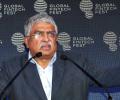
'Binary fission will happen -- startups will lead to more startups.'

'AI analyses body language, etiquette, and communication skills, providing an in-depth performance matrix and a ranking system to help employees identify areas of improvement.'

'This case is not a good example of intellectual property strategy for either sector.'

FSN E-Commerce Ventures Ltd, which operates online beauty e-commerce platform Nykaa, on Monday said it has fixed a price band of Rs 1,085-1,125 per share for its initial public offer (IPO) that opens for subscription later this week. The IPO will open for subscription on October 28 and conclude on November 1. IPO comprises a fresh issue of equity shares aggregating up to Rs 630 crore (fresh issue) and an offer for sale of up to 41,972,660 equity shares being offered by the selling shareholders (offer for sale or OFS), a statement said.

AIADMK leader Edappadi K Palaniswami is under pressure from his party as his unclear stand on the BJP alliance has brought back fears among party workers that the party may lose its identity, be forced into an unwanted coalition, and be taken over by the BJP later, observes N Sathiya Moorthy.

The total number of demat accounts in the country stood at 171.1 million as of August 31.

The FM further said that the listing brings in more financial discipline among the entities.

Quick commerce major Zepto has raised $340 million in a follow-on financing round at a valuation of $5 billion as it gears up for an initial public offering (IPO). This is Zepto's third big-ticket fundraise within a year. With this, the company has raised more than $1 billion in 12 months.

More screens, more films, and longer windows will convert to more people watching, assuming they know a film is releasing, points out Vanita Kohli-Khandekar.

The race to acquire diversified fintech firm Religare Enterprise Limited (REL) intensified as Dabur group promoters, the Burman family, said it was going ahead with the open offer on Monday and claimed that the counter offer made by US-based businessman Digvijay Gaekwad wasn't valid and will not stand scrutiny of market regulator Sebi. The Burman family claimed that the competing offer falls outside the 15-day window stipulated by the Sebi takeover code, following their initial offer on October 4th, 2023.

Facebook, which has about 800 million users worldwide, is currently in 'internal discussions' with US regulator Securities and Exchange Commission regarding the timing of its initial public offering, the Wall Street Journal quoted people familiar with the matter as saying.

'We are too important to want to be paired with Pakistan but too intensely connected to it to successfully detach ourselves,' asserts Aakar Patel.

Facebook Inc's initial public offering will vastly increase the wealth of its 27-year-old co-founder Mark Zuckerberg, leaving him with over $ 1 billion in cash and stocks worth $17.6 billion.

The exit of WeWork from its India unit is unlikely to have an impact on the country's co-working real estate market, according to industry executives. The company last week received approval from the Competition Commission of India (CCI) to sell its entire 27.5 per cent stake in the India unit to Real Trustee Advisory Company. The majority of the stake (72.5 per cent) in WeWork India is owned by Bengaluru-based Embassy Group.

Online auto classified platform CarTrade Tech on Tuesday said it fixed a price band of Rs 1,585-1,618 a share for its nearly Rs 2,999-crore initial public offer. The initial public offering (IPO) will open for subscription on August 9 and conclude on August 11. The bidding for anchor investors will open on August 6, the company announced. The initial share-sale will be entirely an offer for sale (OFS) of 18,532,216 equity shares.

'IPOs have performed exceptionally well, with a notable increase in average ticket size from Rs 800 crore in the last financial year to around Rs 1,300 crore in this financial year.'

India's sprawling digital public infrastructure received a glowing endorsement from billionaire philanthropist Bill Gates on Wednesday as he praised the country's "great" digital network, reliable and low-cost connectivity, and said this will be the cheapest 5G market. Under the G20 presidency of India, a session on 'Building resilient and inclusive economies- the Promise of Digital Public Infrastructure' was held on Wednesday in New Delhi, where the Microsoft co-founder spoke of India's digital identity Aadhaar, its payment infrastructure, and rapid strides that the country has taken in bringing more people into formal banking system. "India in particular, by laying the groundwork for digital public infrastucture starting with identity system, allows people to build on top of that.

IPOs inherently carry more risks than stocks that have been listed on the exchanges for some time.

Mukesh Ambani-owned Reliance Industries (RIL) is in discussions to acquire a 29.8 per cent stake in Tata Play from the Walt Disney Company, according to sources close to the development. This move is seen as part of RIL's broader strategy to deepen its footprint in India's television distribution sector. Tata Sons, the holding company of the Tata group, currently holds a 50.2 per cent stake in the satellite television broadcaster.
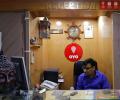
The move might delay the Gurugram-based hospitality unicorn's initial public offering (IPO). OYO filed preliminary documents with the Securities and Exchange Board of India (Sebi) in September 2021 for a Rs 8,430 crore IPO.

'We've moved from thousands killed yearly in Jammu and Kashmir to 127 last year.' 'Cross-border terrorism in Kashmir is being solved. We are winning it.'

The turmoil in the markets has been cited as the reason for the dip in the IPO market.
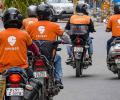
Swiggy is planning to file its draft red herring prospectus with the Securities and Exchange Board of India for its initial public offering (IPO) in the next two weeks, aiming for an $11 billion IPO valuation target. The Bengaluru-based firm plans to raise an estimated $1 billion (Rs 8,300 crore) through the IPO this year. The company is targeting a valuation in the range of $10-11 billion, and it currently has approximately $800 million in cash from the previous funding round, according to sources.

Steel Ministry is unwilling to sell shares at lower than the present book value of Rs 22.50 a share. Merchant bankers UBS Securities and Deutsche Equities (India) have proposed Rs 15-17 as the price band.

'The biggest near-term risk to Indian equities is the outflow of investments to China as tactical trades by foreign investors.'

Equity fundraising through initial public offerings (IPOs) rose 20 per cent during the financial year 2023-24 (FY24). During the period, 76 Indian corporates raised Rs 61,915 crore through main board IPOs, compared to Rs 52,116 crore mobilised by 37 IPOs in 2022-23, as disclosed by PRIME Database. However, if one excludes the mega Life Insurance Corporation (LIC) IPO, which came out in 2022-23, IPO mobilisation increased by 58 per cent from last year.

'No retaliatory tariffs now. You can retaliate after a few months.' 'Today, there is no need to retaliate because it is a question of long term benefits.'

This year's tally is the second best ever after 2022 when 16 firms raised Rs 40,311 crore, led by LIC's biggest-ever IPO.

Here are certain fundamental principles to help us find out what suits us right while investing in initial public offerings.

The 2022-23 Budget has projected a disinvestment target of Rs 65,000 crore for next financial year. This is significantly lower than the estimated Rs 1.75 lakh crore budgeted for 2021-22. In the revised estimates, the target for 2021-22 has been cut to Rs 78,000 crore.

Equity fundraising through initial public offerings (IPOs) rose 20 per cent during the financial year 2023-24 (FY24). During the period, 76 Indian corporates raised Rs 61,915 crore through main board IPOs, compared to Rs 52,116 crore mobilised by 37 IPOs in 2022-23, as disclosed by PRIME Database. However, if one excludes the mega Life Insurance Corporation (LIC) IPO, which came out in 2022-23, IPO mobilisation increased by 58 per cent from last year.

The company has filed a registration statement with US market regulator Securities and Exchange Commission for a proposed initial public offering of its ordinary shares, MakeMyTrip Ltd said.

...the DMK chief minister's campaign -- which includes criticism of the BJP's 'pro-Hindutva, anti-Tamil, anti-federal' policies and building on his own government's social welfare programmes targeting especially women and youth -- appeals to Tamil Nadu's voters in next year's assembly election, explains N Sathiya Moorthy.

Indian stock markets are expected to be driven mostly by global factors this week amid a lack of local triggers and earnings season largely coming to an end, say analysts. Crude oil prices, rupee movement and US Federal Reserve meeting minutes to be released this week will also influence the market sentiment. "With the earnings season behind us, global cues would largely dictate the trend in the coming week," Ajit Mishra, SVP - technical research, Religare Broking Ltd, said.
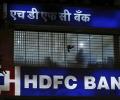
HDFC Bank's latest shareholding data showed that the room for foreign investment has fallen just 5 basis points short of the threshold set by Morgan Stanley Capital International (MSCI) to fully include the stock in its indices. Currently, the index provider has applied an adjustment factor of 0.5 since the foreign room is less than 25 per cent. Removal of the adjustment factor will result in inflows of a massive $4.8 billion (Rs 40,000 crore) into HDFC Bank, according to Brian Freitas, a New Zealand-based analyst with Periscope Analytics.

The issue, through which the Centre will be divesting 10 per cent of its stake, garnered applications for 5,67,40,450 shares within the first hour of opening.
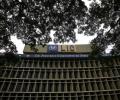
Sixteen merchant banks are in the fray to act as book running lead managers (BRLM) for the initial public offering of Life Insurance Corporation of India (LIC). These merchant banks will have to make a presentation before the Department of Investment and Public Asset Management (DIPAM) on August 24-25. The shortlisted banks are BNP Paribas, Citigroup Global Markets India, BofA Securities, Goldman Sachs (India) Securities, HSBC Securities and Capital Markets(India), J.P. Morgan India, Nomura Financial Advisory and Securities (India), Axis Capital, DAM Capital Advisors, HDFC Bank, ICICI Securities, IIFL Securities, JM Financial, Kotak Mahindra Capital, SBI Capital Market, and Yes Securities India.
